
Portage Previous Residents by Era
Each source sees a different part of one Portage address. Begin with the newest reliable record and move back one link at a time. Do not force a source beyond its proven dates or scope.
| Source | Years it covers | Where held | What it shows |
|---|---|---|---|
| Recorder Direct Search | Early 1978 to current index | Porter County Recorder | Names, dates, and document type; no images |
| Recorder images | August 1980 to present | Tapestry, Laredo, office | Recorded images and legal descriptions |
| Historic maps | 1876–1979 listed | GenWeb map pages | Road, lot, and subdivision continuity |
| Directory series | 1885–2015, irregular | State Library, PCPLS, GenWeb | Names, addresses, work, and businesses |
| Federal census | 1790–1950 public | NARA and library databases | Households at the enumeration date |
| Permits | Online start not found | Portage Building Department | Work, inspection, applicant, and address clues |
Recent work often starts with the current XSoft card. Earlier work may start with a map, directory, census, or deed book. A claimed previous resident should rest on at least two compatible sources.
Start Portage Address History in XSoft
The Porter County XSoft search ties a current street address to an owner, mailing address, situs address, parcel or tax ID, legal description, class, transfers, sales, valuation, land, improvements, and map tabs. Situs means the physical location. The mailing address is where tax mail goes and may be elsewhere.
Save the parcel number and legal description before following names. A legal description identifies land by subdivision, lot and block, or metes and bounds. It often survives a street-name change. Transfer and sale rows suggest dates to test in the deed index, but the recorded instrument remains the better evidence of a legal transfer.
Portage district choices include Portage City-Portage Township, Portage City-Westchester Township, and Portage Township. Those are tax and jurisdiction clues, not proof that the postal label matches the city boundary.
Walk Porter County Deeds Backward
The Recorder Direct Search instructions describe a free index that reaches early 1978. Use the current owner as a grantee, the party receiving title, near the assessor transfer date. Open the likely purchase deed and note its seller, document number, date, and legal description.
- Copy the current owner, parcel ID, legal description, and transfer date from XSoft.
- Search the owner as grantee and compare each result with the same land description.
- Take the seller, or grantor, from the matched deed.
- Search that seller as an earlier grantee to find the prior purchase.
- Repeat until the online cutoff, then move to the office ledger or microfilm.
Trusts, estates, companies, spouses, and initials create name variants. Search each exact form. Mortgages, releases, and assignments can confirm the parcel but do not always mean ownership changed.
- Grantor
- The party giving or transferring an interest.
- Grantee
- The party receiving the interest.
- Chain of title
- The linked sequence of recorded ownership transfers.
- Legal description
- The land description that is more stable than a street label.
The source page illustrates the official route for previous residents research.
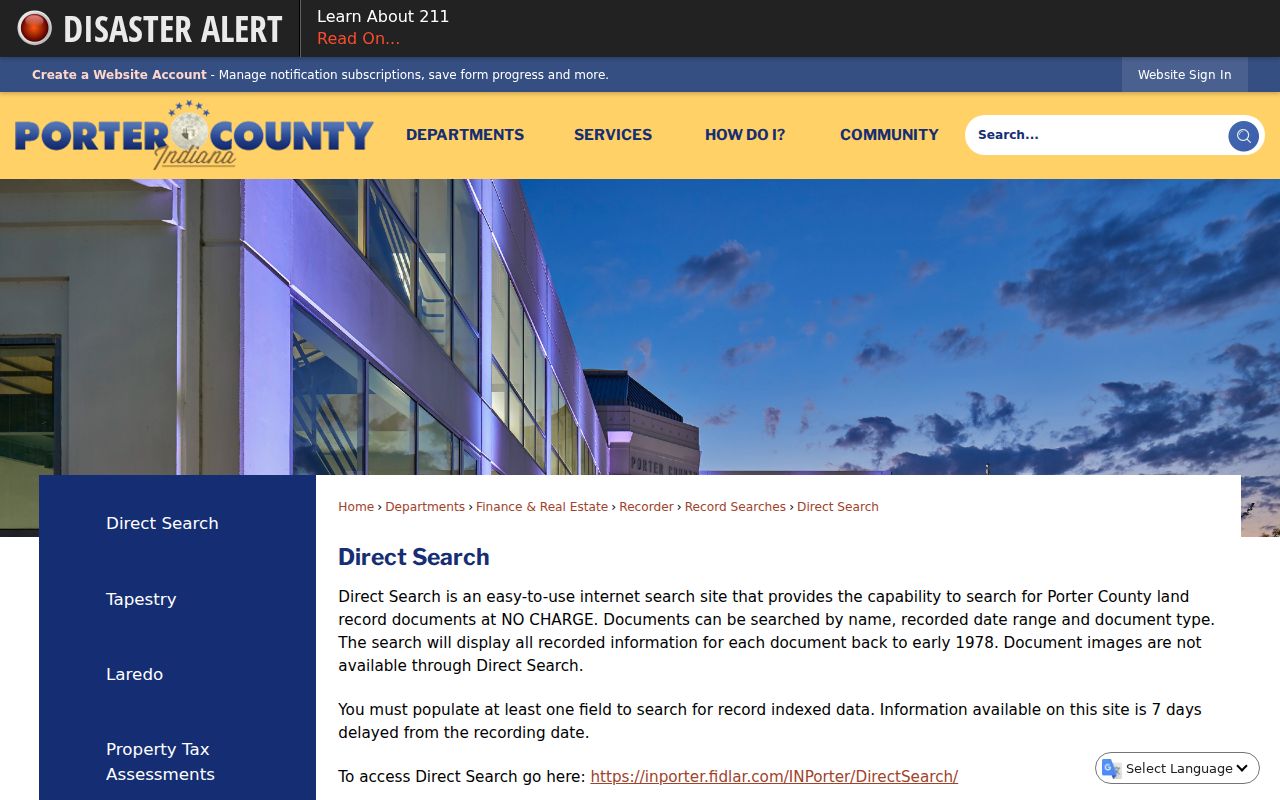
The capture reinforces the early-1978 index boundary and the need to use another channel for images.
Three Portage Deed Access Routes
Direct Search is free but supplies an index without images. Tapestry is a paid route with images and richer search details. Laredo serves account users. The county says images and data reach August 1980, while earlier books and microfilm remain an office task. These cutoffs are not the start of Porter County land records.
The Recorder search-routes page lays out those choices.
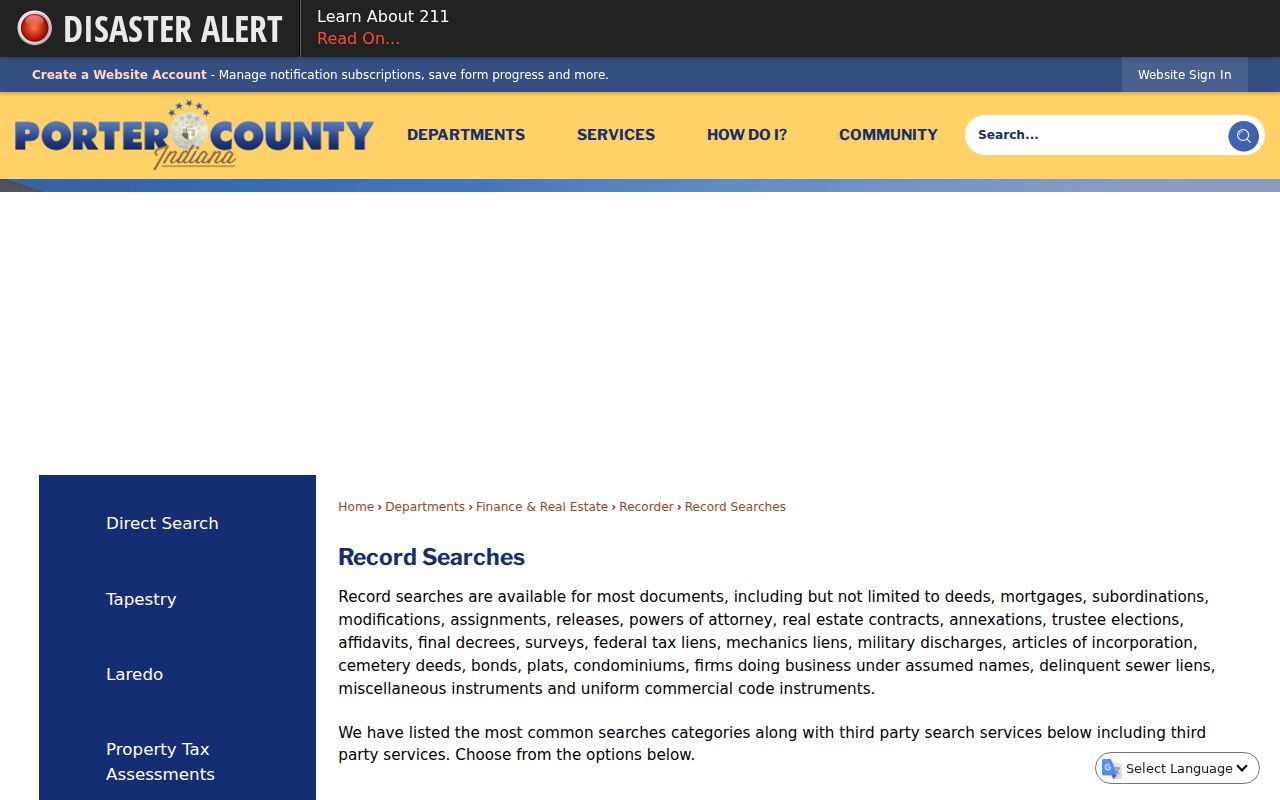
The screen distinguishes an index check from image access and from the in-person path needed for older work.
Recorder staff do not conduct deed research by phone. Public terminals are the sound fallback when the number is unknown. Mail copies work when a recording number or book and page are already known. Ask about the current fee before ordering.
Map Portage Previous Residents Carefully
Historic Portage Township maps are listed for 1876, 1895, 1906, 1921, 1928–29, 1938, 1941, 1948, 1958, 1969, 1973, 1974, 1976, and 1979. They show roads, subdivisions, lot context, and changing place labels. They do not name every occupant.
The Portage Township map collection is the key digital route.
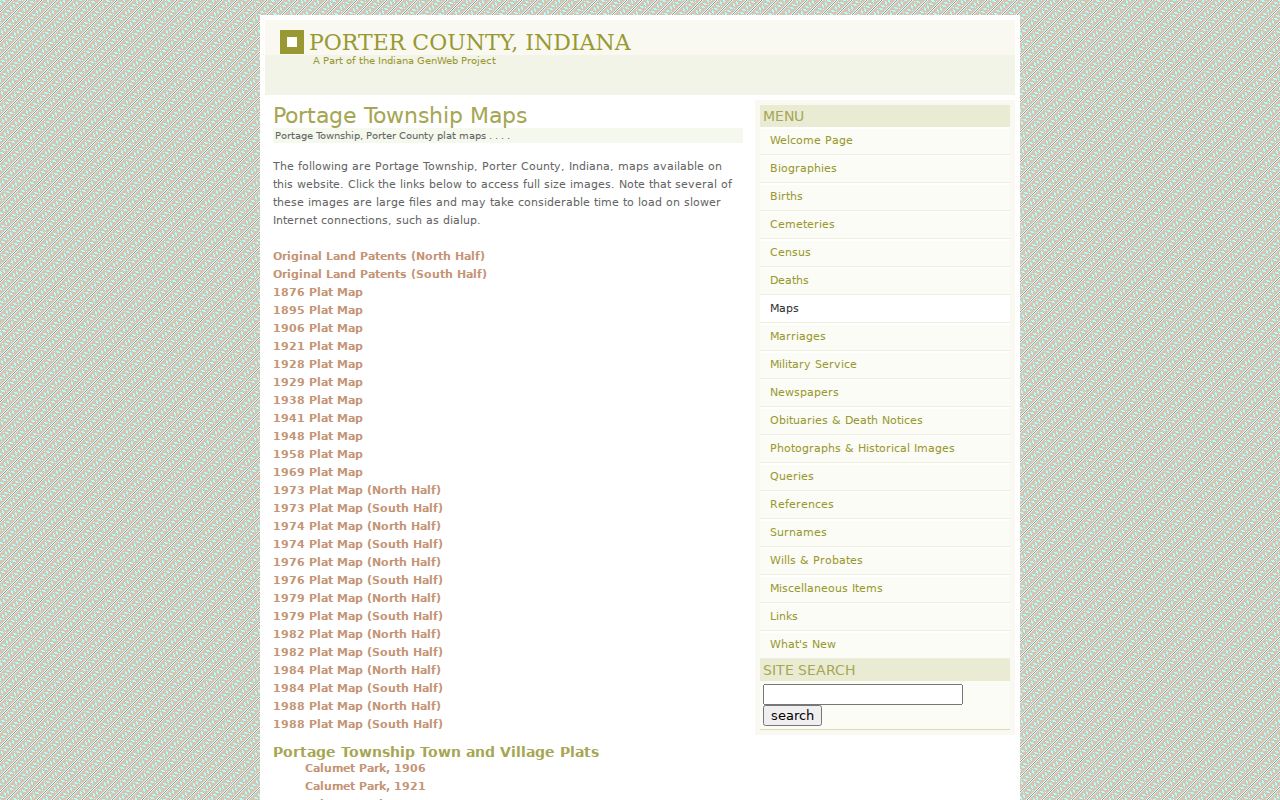
Compare the deed’s lot, block, subdivision, or section data with the map before assuming an old and new street address are the same site.
Search Portage, Portage Township, Garyton, Crisman, McCool, Dunes Park, and South Haven. A postal Portage address does not by itself prove incorporated city limits. Preserve every old label in the research log.
Portage Directories Meet the Census
Deeds name legal parties, not all past residents. Directories, census schedules, obituaries, and probate records add the household layer. The verified Porter County directory years are irregular and often Valparaiso-centered. Their collections and abbreviations are covered in the Portage city directory.
- Search the closest directory year for the address, surname, and local place-name variants.
- Record initials, spouse, work, residence marks, page, and printed address.
- Compare the nearest public census year, allowing for enumeration geography and number changes.
- Use the deed’s legal description and a historic map to test continuity.
- Use an obituary, probate file, or cemetery record to explain a death, heir transfer, or surname change.
Census schedules through 1950 are public under the federal 72-year rule as of 2026. The 1960 census is scheduled for release in 2032. A directory occupant can be a boarder or renter, while a deed owner may live elsewhere.
Lawful use. Research Portage previous residents for family or house history, and never use an old address trail to harass or track a living person.
Ask Portage Libraries for House History
The PCPLS Genealogy Center holds directories, yearbooks, local histories, newspapers, microfilm, and database access. Ask for a house-history consultation and any reverse, criss-cross, or telephone volume covering the address. No exact Portage reverse-directory run was verified, so staff confirmation matters.
The Library of Congress Sanborn guide explains how fire-insurance maps record footprints, uses, construction, streets, and nearby structures.
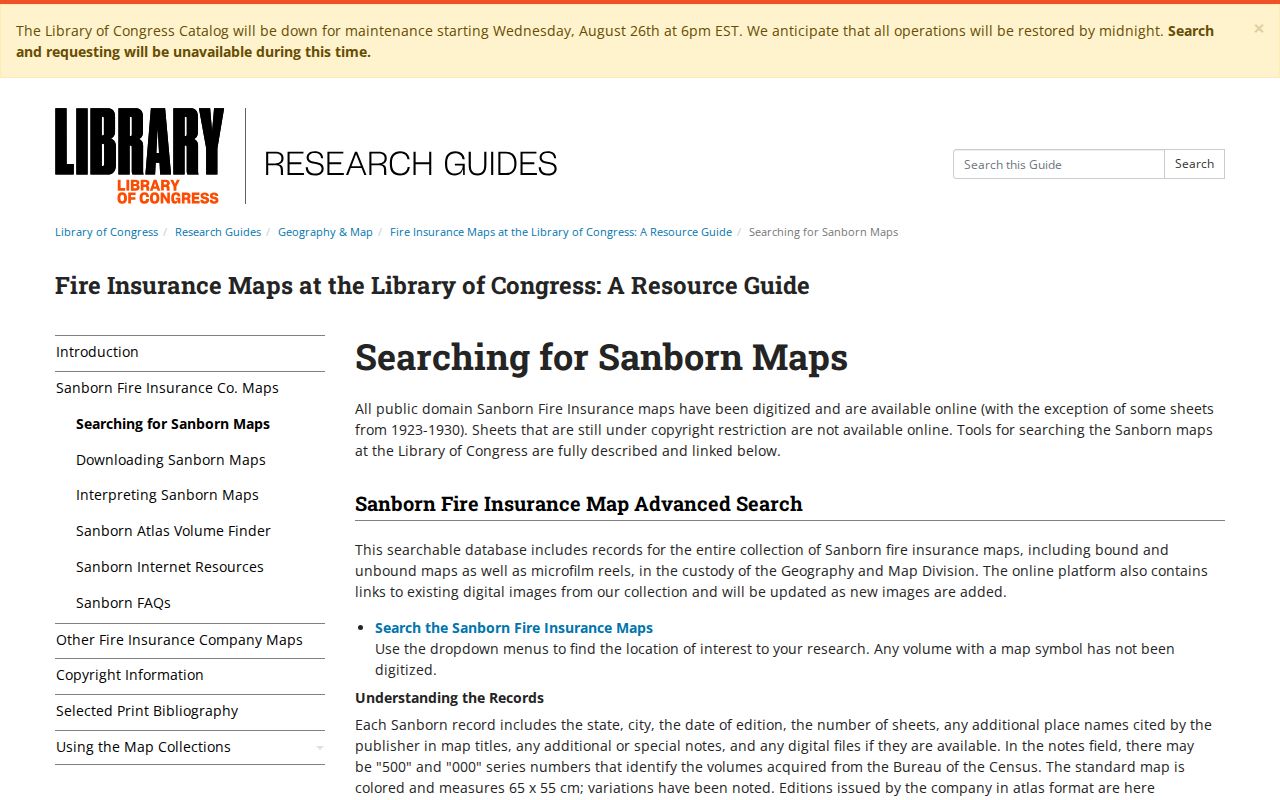
No Portage-specific Sanborn sheet was confirmed. Use this as a method guide, then verify that the address appears in an actual sheet before citing it.
Portage Permits Date the Structure
The Portage Building Department handles records for additions, garages, roofs, pools, occupancy, remodeling, sheds, signs, and other work. No public address-search database or online coverage date was found. Request all permits, inspections, and completion records for the exact address and a defined year range.
A permit dates work, not every occupant. The applicant might be an owner or contractor. Compare the permit date with assessor transfers and deeds. The city records form accepts a document description and response choices such as email, mail, or phone, and states an initial response within five business days.
Close Portage Trails in Probate
An owner’s death can end the simple deed recursion. The Porter County Clerk Archives holds estates, wills, guardianships, marriages, homesteads, property development, and court records reaching to 1836. Search a surname and date range, then compare heirs and property facts with the deed.

The archive provides the heir and estate route when a transfer involves a fiduciary instead of a simple seller.
The Portage cemetery database and GenWeb obituary links can add death dates and name variants. Indiana Legacy provides statewide obituary, marriage, court, and newspaper indexes. These are endpoints and corroboration, not a complete list of everyone who lived at an address.
Portage Previous Residents Need Context
The State Library Porter County guide places land and marriage records at county organization and routes researchers to the right custodians.
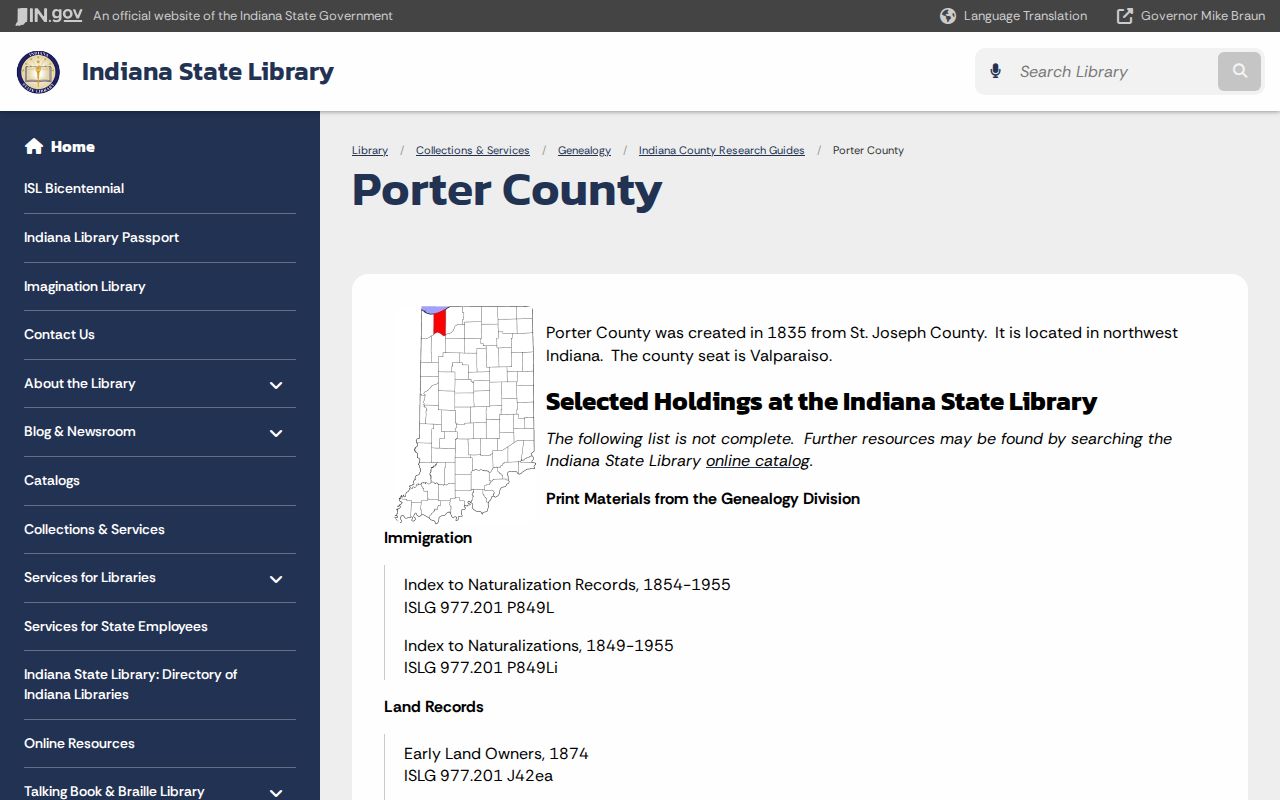
The guide helps separate a genuine old-record gap from a record held offline or under a different county series.
Portage’s official sources also disagree on whether city incorporation occurred in 1967 or 1968. Preserve the attribution or say late 1960s. No courthouse fire, verified street-renumbering year, or Portage Sanborn run was found. Honest gaps are better than a smooth but false address history.